
Blog
How we're building a growth engine that runs itself
How we're building an engine that runs a growth cycle end to end, leaving only the decisions to the team.
Growth is a data-heavy operation: fragmented data, gathered and reconciled and investigated before anyone can decide anything. We're building the engine that runs that operation end to end, so a team's job shrinks to the decisions only a person should make.
What is an AI-run operation?
An AI-run operation is one where the work between systems runs on AI under policy the business sets: gathering fragmented records, reconciling them, investigating what happened, deciding, and acting. Unusual cases still reach a person.
Here's what a growth team's week looks like today. Monday starts with pulling the numbers into spreadsheets and reconciling them, then a meeting to align on the signal. Any real question, why retention dipped, whether a channel is still paying back, means a multi-hour dig that competes with the rest of the week's work. The team steers the channels by hand every day. An email campaign takes time to plan, write, and send.
Add it up and growth work costs a team 15 to 30 hours a week.
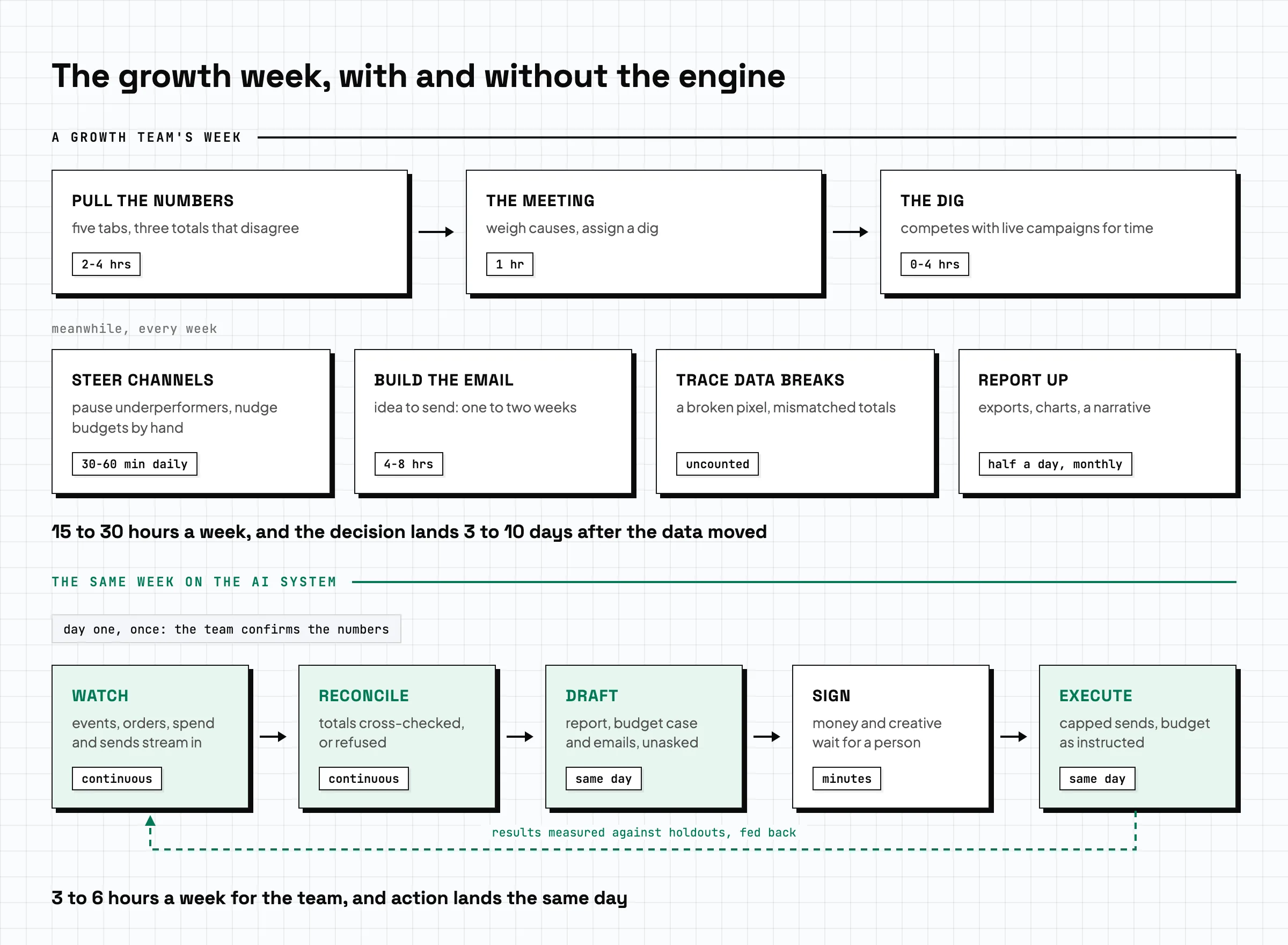
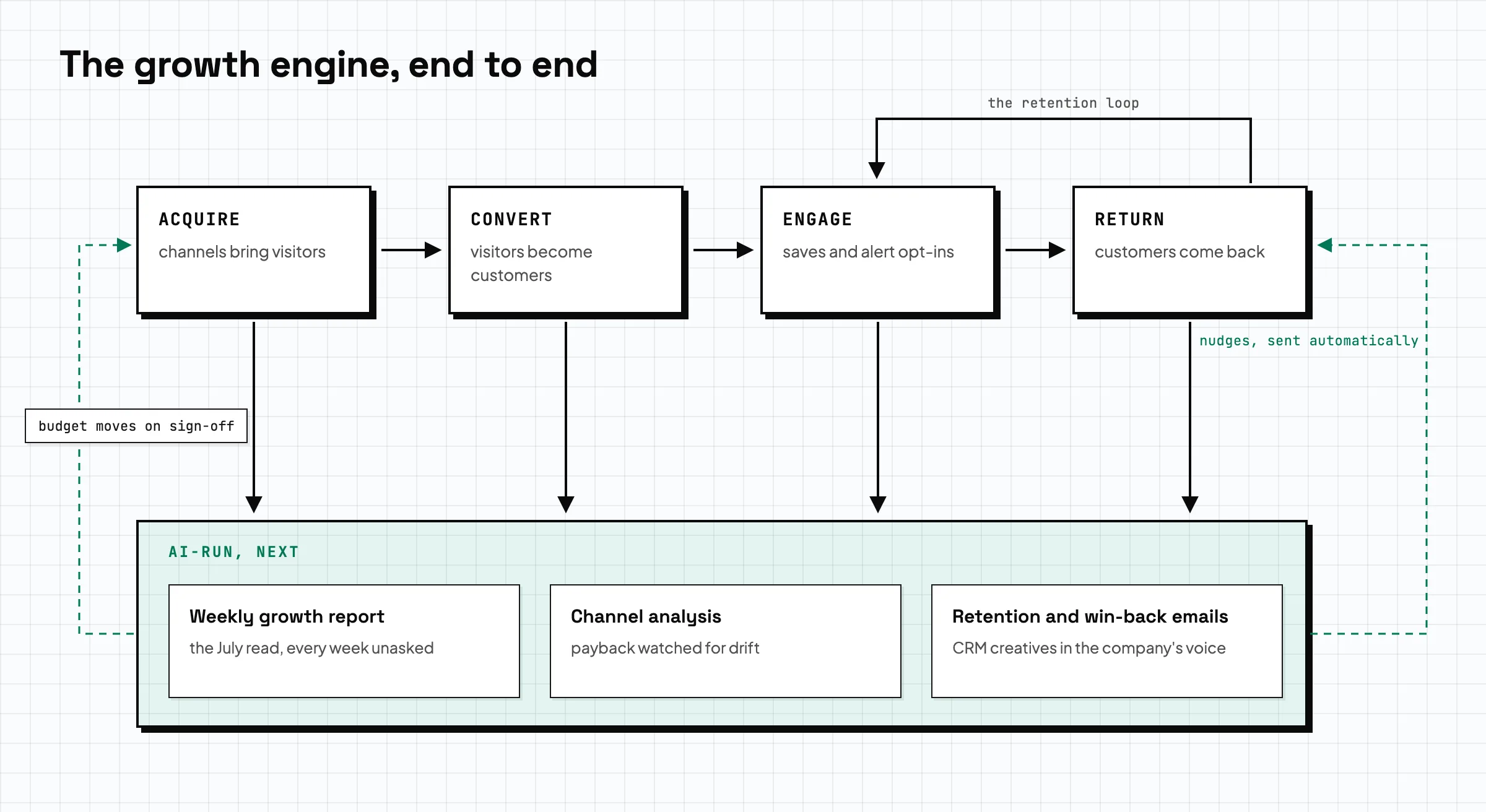
Here's the engine we're building. It will watch the growth loop continuously, reconcile every source against the others, and refuse to answer where it can't verify the numbers. Each week it will produce the read the team used to dig for, draft the budget case for shifting spend, and write the emails retention needs, all without anyone asking. A person's signature is the only thing that moves money or sends anything to a customer. Once signed, execution will run inside exactly the bounds that signature set, and every result will be measured against a holdout so the team knows what the change actually did.
Next, the same machine extends. The weekly report will arrive as a standing one. Retention and win-back emails will fire the moment a churn signal appears. CRM templates and creatives will carry the company's own voice into every send. Channel analysis will feed straight into budget, and once the team signs off, the redistribution will execute on its own.
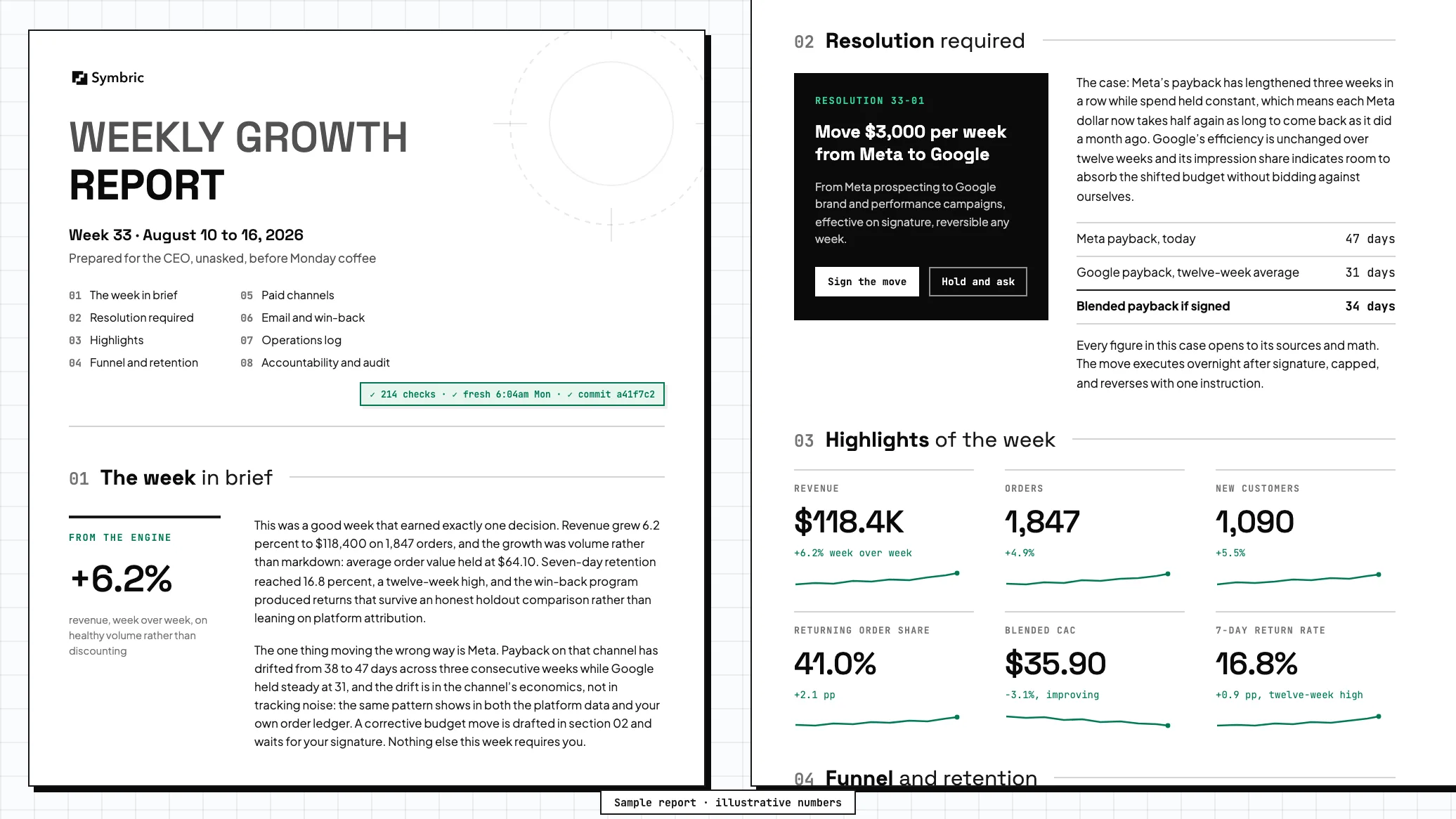
Here's what will land on a CEO's desk every week; the version pictured below is a sample, illustrative numbers, real shape. One paragraph opens with the state of the business. A resolution card sits below it, waiting for a signature before anything happens. Certified highlights show the numbers worth knowing. An operations log lists every autonomous action the system took that week, next to the signed bound that authorized it. And where a number can't be certified, the report says so in the open.
Pieces of this already run. A design partner had the reconciliation layer catch two answers to the same retention question 189 customers apart, and it told the team which one was right. The corrected read showed something the team hadn't seen: roughly five of six first-time visitors never came back within a week. That number changed the plan. Instead of scaling acquisition spend into a loop that was leaking that badly, the team fixed the step where a visitor saves what they're watching, shipped it the same day the analysis landed, and avoided pouring money into the leak.
This is what a leader gets when the engine is whole: a growth operation that runs itself between decisions, so the only thing waiting for a person is the call only a person should make.